
📞 Call (912) 214-8566 — Free Estimate
Tree Removal in Pooler, GA
Tree removal in Pooler looks different from tree work in older parts of the Savannah metro. Pooler has grown rapidly over the past two decades — subdivisions like Westbrook, Godley Station, and Rice Hope have replaced what were previously pine and mixed hardwood lots, and the trees that remain on those properties are often the original site timber that survived the clearing process. These trees were not selected for placement — they are simply what was left standing — and they frequently present structural issues that purpose-planted trees do not.
Savannah Tree Co works throughout Pooler on both new construction-era properties and the older lots closer to the city’s historic core along Highway 80. Whether you have a slash pine crowding a new fence line in Westbrook or a mature water oak over a detached garage on an older parcel, we assess and remove trees of all sizes safely and efficiently.
Pooler’s Tree Challenges
The rapid development of Pooler has created specific tree issues that we see repeatedly. Slash pines — the dominant species on undeveloped coastal Georgia land — were often left standing in clusters during subdivision clearing. These trees develop shallow root systems in sandy coastal soil and are highly susceptible to wind throw during the tropical storms and squall lines that move through the Savannah area. A pine that looks healthy in April can be on the ground by September.
In Pooler’s newer subdivisions, builder-planted trees are now reaching the size where they conflict with structures, driveways, and utility easements. Bradford pears, a species commonly planted in Georgia subdivisions through the 2000s, are notorious for weak branch unions that split without warning as the tree matures. If you have Bradford pears on your Pooler property, we recommend an assessment before they become an emergency.
Water oak is another species we remove frequently in Pooler. Water oaks are fast-growing and provide good shade quickly — which is why builders and homeowners planted them widely — but they are also short-lived and prone to internal decay by the time they reach thirty to forty years of age. A water oak that looks full and healthy from the outside can be significantly hollow inside.
Working in Pooler’s Neighborhoods
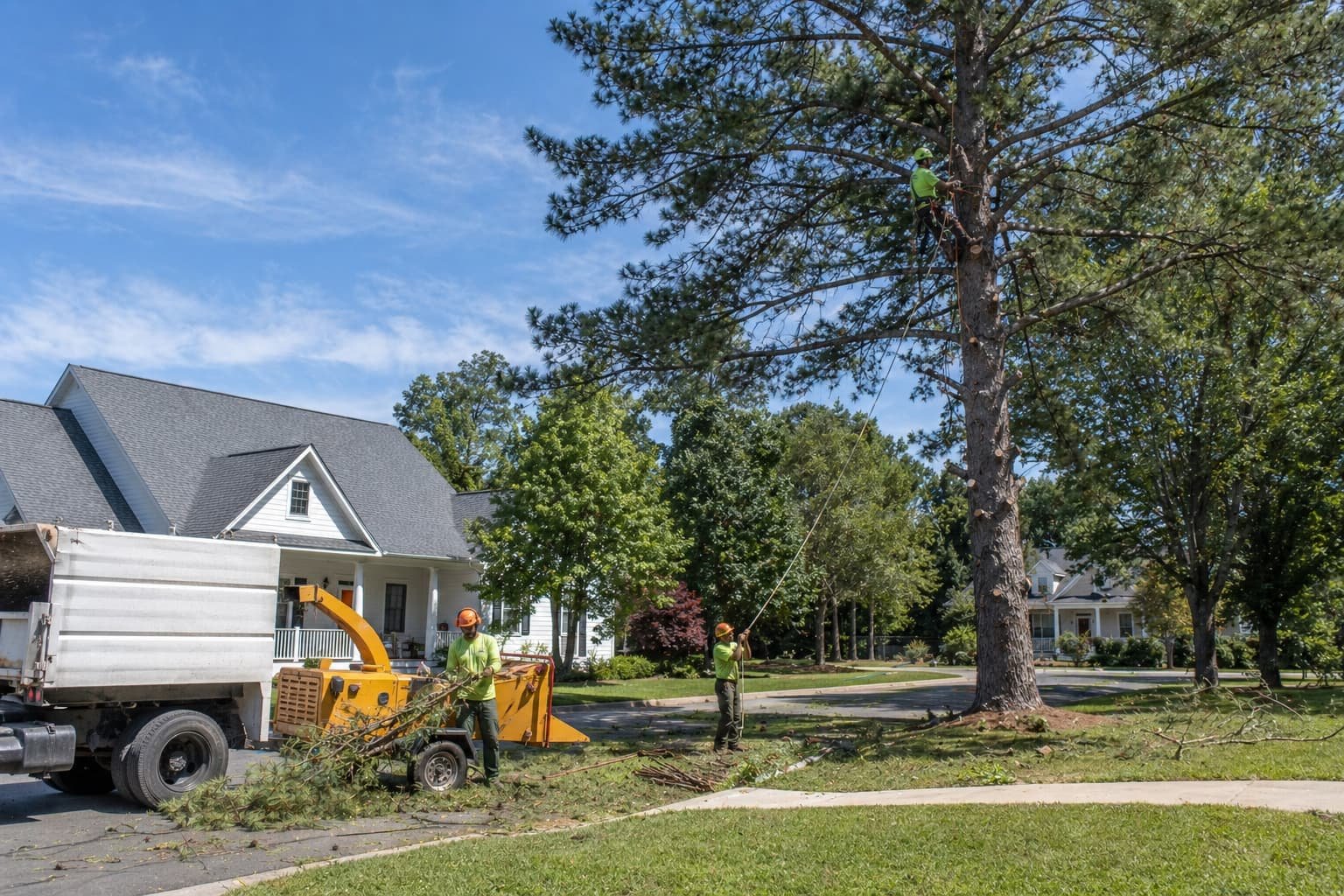
Pooler’s newer subdivisions have HOA requirements and tight lot lines that affect how tree removal is planned and executed. We are experienced working within HOA guidelines and take care to protect neighboring properties, driveways, and landscaping throughout the job. In subdivisions with narrow side yards, we use sectional removal techniques to bring trees down in controlled pieces rather than felling — protecting fences, outbuildings, and neighboring structures.
For properties along the older Highway 80 corridor and around Pooler Parkway, lot configurations vary widely and we assess each job on its own terms. Call us at (912) 214-8566 to schedule a free on-site estimate.
Stump Grinding in Pooler
We offer stump grinding as a standalone service or bundled with tree removal throughout Pooler. Pooler’s sandy soil grinds efficiently and most stumps are completed quickly. For properties with multiple stumps from previous clearing or storm damage, we provide combined estimates that make the most of a single visit.
After grinding, the wood chip mulch can be left to fill the void and decompose, or hauled away for a clean finish — whichever works best for your landscaping plans. The International Society of Arboriculture recommends stump removal to eliminate pest habitat and disease risk, particularly in areas with active termite pressure like coastal Georgia.
Frequently Asked Questions
Do you work in Pooler HOA communities?
Yes. We are familiar with the requirements of Pooler’s HOA-governed subdivisions and work within those guidelines. If your HOA requires documentation or approval before tree removal, we can provide written assessment and scope of work to support that process.
I have several slash pines leaning toward my house — what should I do?
Call us for an assessment as soon as possible. Leaning pines in coastal Georgia sandy soil are a genuine risk, particularly before and during storm season. We will assess the lean, the root condition, and the proximity to your structure and give you an honest recommendation.
Can you remove a tree that is touching my neighbor’s fence?
Yes. Trees on or near property boundaries are one of the most common jobs we handle in Pooler’s tightly platted subdivisions. We work carefully to protect the fence and coordinate with you on access and cleanup before starting.
How quickly can you schedule in Pooler?
For standard removals, we typically schedule within one to two weeks depending on current workload. Emergency situations — active structural damage or imminent fall risk — are prioritized and we respond as quickly as possible.