📞 Call (912) 214-8566 — Free Estimate
Tree removal in Savannah, GA before hurricane season is one of the most effective steps a homeowner can take to protect their property. Coastal Georgia sits squarely in the Atlantic hurricane track, and every June through November brings the real possibility of tropical storm conditions, high winds, and saturated soils that turn marginal trees into genuine hazards. This guide covers what Savannah homeowners should do before storm season arrives.
Why Trees Are the Biggest Storm Risk on Most Properties
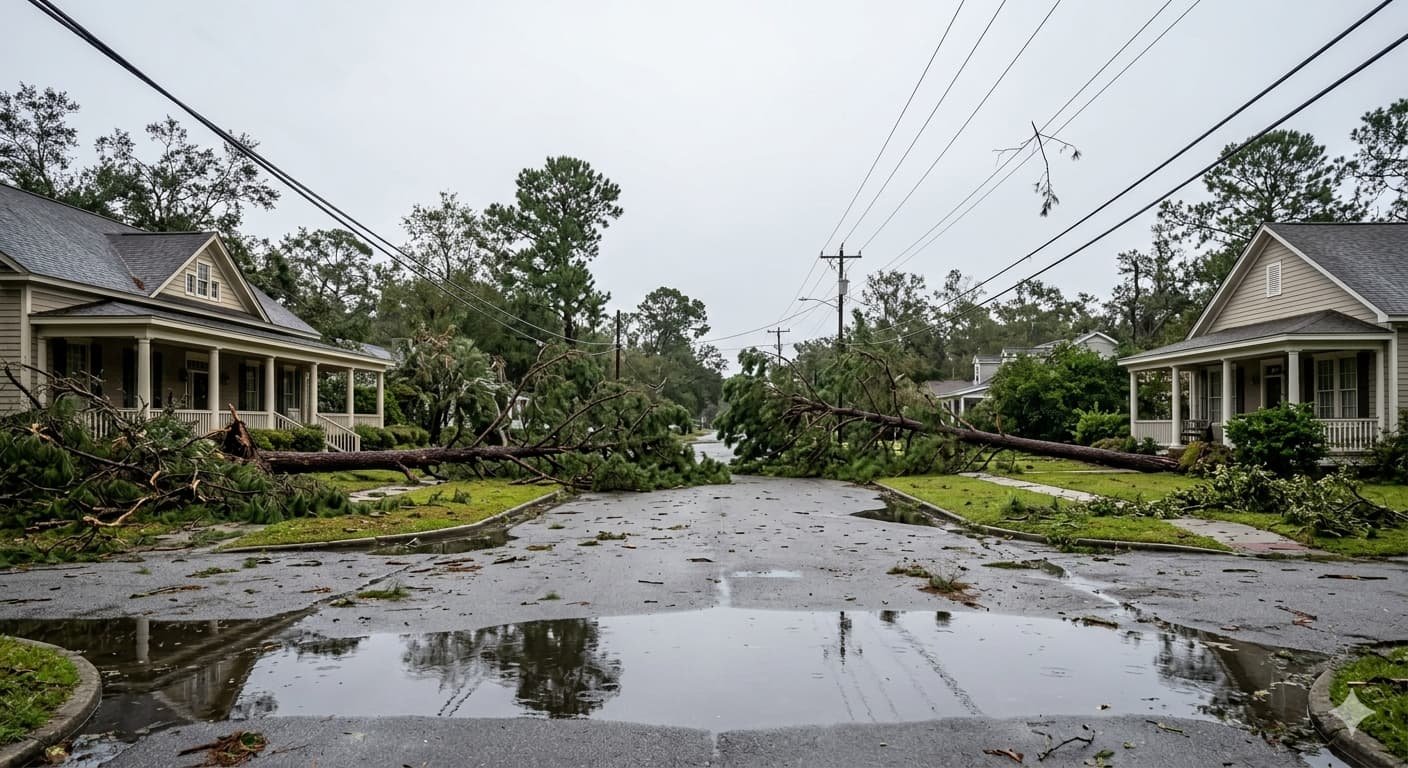
When a hurricane or tropical storm moves through the Savannah area, the most common source of property damage is not wind acting directly on structures — it is trees and large branches coming down on roofs, vehicles, fences, and power lines. Savannah’s mature tree canopy is one of the city’s defining features, but it also means that most residential properties have large trees within fall distance of a structure.
The combination of factors that makes coastal Georgia particularly high risk: sandy soils that lose structural grip when saturated, shallow-rooted species like slash pine that are vulnerable to wind throw, and the sheer size of the mature live oaks, water oaks, and pines that dominate Savannah’s residential landscape. A tree that has stood for decades can fail in a single storm if the conditions are right.
Start with a Professional Tree Assessment
The first step in hurricane preparation for any Savannah homeowner with mature trees near their home is a professional assessment. A trained eye can identify structural weaknesses, root problems, and decay that are not visible from the ground — and that you would not know to look for without experience reading tree condition.
Schedule your assessment in spring — March through May — before the June 1 start of hurricane season. This gives you time to act on any recommendations before the season begins. Trees identified as high risk can be removed or significantly trimmed while scheduling is still flexible. Waiting until May or June means competing with every other Savannah homeowner who had the same idea, and emergency rates apply once a storm is in the forecast.
Trees to Prioritize for Assessment
Not every tree on your property presents equal risk. Prioritize assessment for trees that meet any of the following criteria. Trees within fall distance of your home, garage, or any occupied structure should be assessed first. Large slash pines are a specific priority — their shallow root systems in sandy coastal soil make them among the most likely species to wind throw in a major storm. Water oaks over forty years old are prone to internal decay and should be assessed regularly. Any tree showing signs of lean, canopy dieback, fungal growth at the base, or recent root disturbance from construction should be assessed before storm season regardless of species.
Trimming to Reduce Storm Risk
For trees that do not need removal, strategic trimming reduces storm risk significantly. Crown thinning — selectively removing branches throughout the canopy to reduce wind resistance — allows wind to pass through rather than push against a solid mass of foliage. Dead and weakly attached branches are removed so they cannot become projectiles. Long, heavy limbs extending over structures are shortened or removed to reduce the load and leverage acting on the tree in high winds.
Pre-season trimming should be completed by May at the latest. Trimming during active storm season — particularly when a named storm is in the forecast — is not advisable as crews are prioritizing emergency response and scheduling is unpredictable.
What to Do When a Storm Is Forecast
Once a storm is in the forecast for the Savannah area, tree work is essentially off the table — crews are booked and the window for preparation has closed. At that point, focus on securing loose items in your yard that could become projectiles, documenting the condition of trees near your home with photographs for insurance purposes, and knowing who to call if a tree comes down during or after the storm.
Keep Savannah Tree Co’s number — (912) 214-8566 — saved in your phone before storm season begins. When a tree comes down on a structure, response time matters and having a trusted crew already identified saves critical time.
After the Storm
Post-storm tree assessment is as important as pre-storm preparation. A tree that survived a storm may have sustained root damage, lost significant anchoring, or developed new cracks or splits that were not present before. A tree that looks intact after a major storm is not necessarily safe for the next one. Schedule a post-storm assessment for any tree that was subjected to significant wind load, particularly if you noticed unusual movement or sounds during the storm.
The International Society of Arboriculture provides homeowner guidance on storm preparation and post-storm tree assessment — we follow those standards on every assessment we conduct in the Savannah area.
Book Your Pre-Season Assessment
Savannah Tree Co provides pre-hurricane season tree assessments, trimming, and removal throughout Savannah, Pooler, Richmond Hill, Hinesville, and Statesboro. Spring is the right time to act — call us at (912) 214-8566 or use our Free Estimate form to schedule a visit before the season begins.