📞 Call (912) 214-8566 — Free Estimate
Tree removal in Savannah, GA often starts with a homeowner noticing something is not quite right with a tree on their property — but not being sure whether it is serious enough to act on. Knowing the warning signs of a dying or structurally compromised tree is important in coastal Georgia, where the combination of sandy soils, high humidity, and annual storm season means a failing tree can become a genuine hazard quickly. This guide covers the most common signs that a tree needs professional assessment and potentially removal.
Dead or Dying Branches in the Upper Canopy
Deadwood in the upper canopy is one of the clearest early warning signs. A healthy tree maintains live growth to its outermost branches. When significant sections of the upper canopy are bare while the rest of the tree is in leaf, or when large branches are visibly dead and brittle, the tree is in decline. The question is whether the decline is recoverable or terminal.
In Savannah’s climate, upper canopy dieback can result from root damage, vascular disease, lightning strike, or prolonged drought stress — even in a region that receives significant rainfall. A tree showing more than twenty to thirty percent canopy dieback is a candidate for removal assessment regardless of how healthy the remaining canopy looks.
Fungal Growth at the Base or on the Trunk
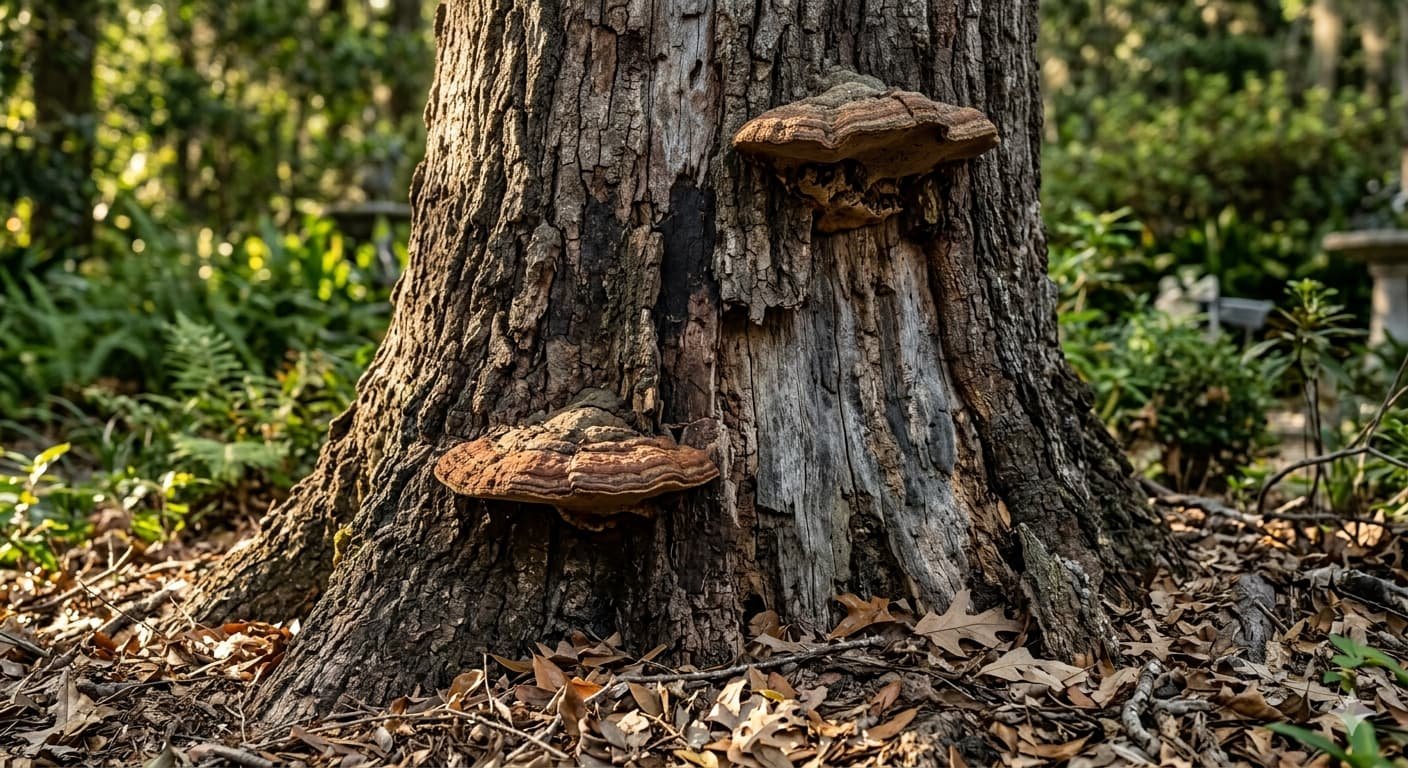
Fungal conks — the shelf-like growths that appear on the trunk or at the base of a tree — are a serious warning sign. They indicate internal wood decay that is already well advanced by the time the external fruiting bodies appear. Ganoderma, a root rot fungus, is particularly common in coastal Georgia and affects palms, oaks, and other hardwoods. By the time a Ganoderma conk is visible at the base of a tree, the structural integrity of the root system is already significantly compromised.
Not all fungal growth on a tree indicates imminent failure, but any fungal fruiting body on a tree near a structure warrants professional assessment. Do not assume a tree is safe simply because it is still standing and still has leaves.
Cracks, Splits, and Cavities in the Trunk
Vertical cracks running along the trunk, large cavities where wood has decayed away, and horizontal splits in the main stem are all structural warning signs. A cavity in the trunk does not automatically mean the tree must come down — some trees compartmentalize decay effectively and remain structurally sound for years — but the size, location, and extent of the cavity determines the risk.
Co-dominant stems — two main trunks growing from the same point with included bark between them — are a specific structural weakness common in water oaks, Bradford pears, and some maples. The included bark prevents the union from forming properly, and these stems frequently split apart under storm load. If your tree has a co-dominant stem structure, it should be assessed before storm season.
Leaning That Has Changed
Most trees have some natural lean, and a gradual lean that has been present for years is usually not an immediate concern. What matters is change — a tree that has begun leaning more than it used to, or that developed a lean suddenly after a storm or heavy rain event, is showing signs of root failure. In Savannah’s sandy coastal soil, root systems can lose their grip rapidly when the soil is saturated, and a tree that is beginning to lean after rain is at real risk of full failure in the next weather event.
Check the base of a leaning tree for soil mounding or cracking on the side opposite the lean — this is a sign that root plate movement has already begun and the situation is urgent.
Root Damage and Soil Disturbance
Construction activity is one of the leading causes of delayed tree decline in urban Savannah. Root zone compaction during renovation projects, trenching for utilities, and changes to grade that alter drainage patterns all damage tree root systems — but the tree may not show visible decline for two to five years after the damage occurs. If you have had construction work near a mature tree in the past few years and the tree is now showing canopy thinning or dieback, the two are likely connected.
Severed surface roots — from mowing damage, edging, or construction — also weaken the tree’s structural anchor. A tree with significant root damage on the windward side is at increased risk of wind throw during storm events.
Pest and Disease Activity
Bore holes in the bark, sawdust accumulation at the base, or unusual patterns of bark loss can indicate beetle or borer activity. Laurel wilt, spread by the ambrosia beetle, has devastated redbay populations across coastal Georgia and is an immediate death sentence for affected trees — there is no treatment and removal is the only option once a tree is infected.
Leaf discoloration, off-season leaf drop, and abnormally small or distorted leaves can indicate vascular disease, root problems, or systemic stress. These symptoms alone do not confirm a tree needs removal, but they warrant a professional assessment to identify the cause.
When to Call for an Assessment
If your tree is showing any of the signs described above — particularly if it is close to your home, a vehicle, or a structure — do not wait. A professional assessment gives you accurate information about the actual risk the tree presents and the options available. Savannah Tree Co provides tree health assessments throughout the Savannah metro area. The International Society of Arboriculture sets the standards for tree risk assessment that guide our evaluation process.
Call us at (912) 214-8566 or use our Free Estimate form to schedule a visit. If you believe a tree on your property is an immediate hazard, call us directly rather than using the form.